



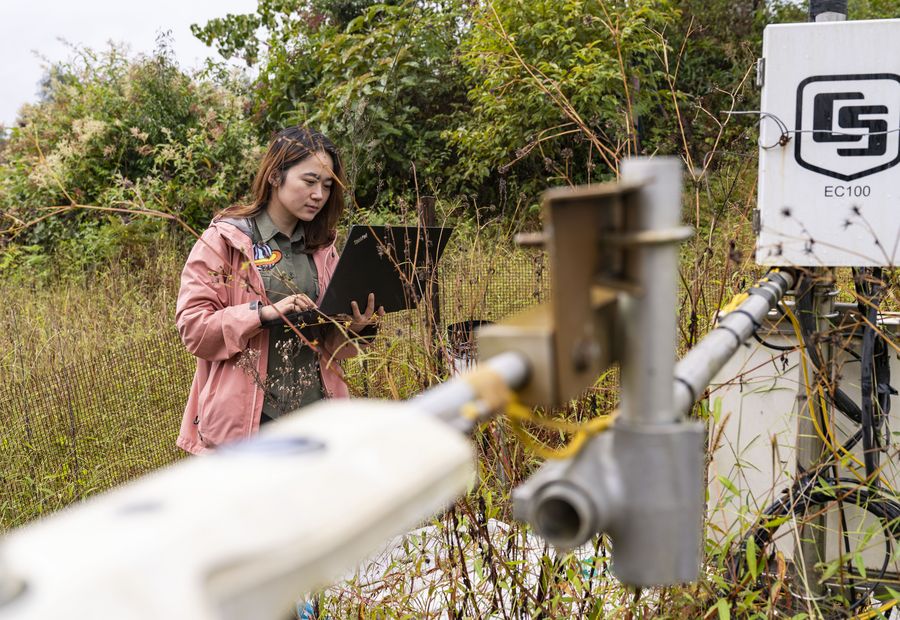
A researcher reads precipitation data of the Yarlung Zangbo Grand Canyon on 22 Oct, 2019 in southwest China's Tibet Autonomous Region. (Xinhua/Sun Fei)
Chinese researchers have set up comprehensive observation stations at the entrance, middle and end of the Yarlung Zangbo Grand Canyon, collecting data including precipitation and humidity to analyze the water vapor transmission.
LHASA, Oct. 25 (Xinhua) -- Chinese researchers announced Thursday they have set up an observation network of water vapor transmission in southwest China's Tibet Autonomous Region.
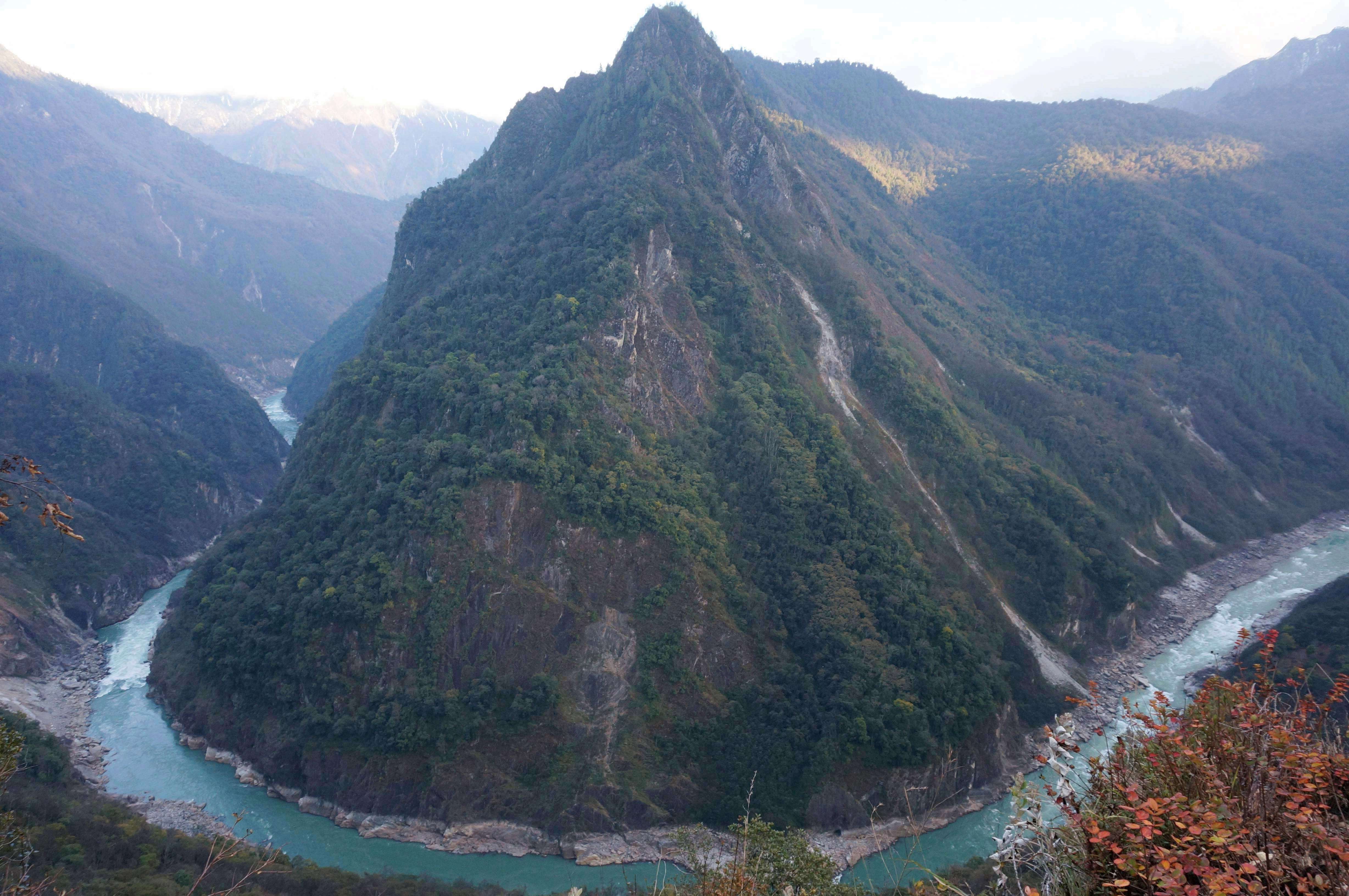
File photo of the U-shaped Great Bend of Yarlung Zangbo River Grand Canyon in Nyingchi, southwest China's Tibet Autonomous Region. Yarlung Zangbo River Grand Canyon, regarded as the deepest canyon in the world, is slightly longer than the Grand Canyon in the United States. (Xinhua/Wang Yunjia)
The researchers set up the observation network along the Yarlung Zangbo Grand Canyon, known as the world's deepest canyon, which was confirmed as the largest water vapor transmission channel in the Qinghai-Tibet Plateau by Chinese Academy of Sciences (CAS) in 1981.
The transmission channel has obvious influence on the geography and landscape characteristics on the south and north sides of the Himalayas and its glaciers, according to the researchers.
The researchers set up comprehensive observation stations at the entrance, middle and end of the canyon, collecting data including precipitation and humidity to analyze the water vapor transmission.
The observation of the water vapor transmission along the canyon can help uncover the causes of water resources imbalance in the plateau, said Chen Xuelong, a researcher with Qinghai-Tibet Plateau research institute of the CAS. ■
