WELLINGTON, June 7 (Xinhua) -- Commercial fishing vessels at greatest risk of encountering the rare Maui dolphin will be required to operate with on-board cameras from Nov. 1 to strengthen New Zealand's fisheries management system through cultural and behavioral change.
New funding in Budget 2019 will ensure the country's fisheries are managed sustainably, compliance is encouraged, and monitoring and verification are increased, Prime Minister Jacinda Ardern said in a statement on Friday.
Enhanced fisheries management helps secure a sustainable future for marine species, Ardern said.
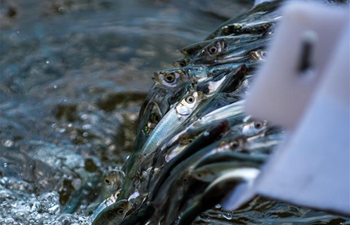
Maui dolphins are critically endangered. It is estimated just 63 adults remain in New Zealand waters. Their habitat stretches from Northland to Taranaki and overlaps the inshore fishery where commercial vessels catch species like snapper, tarakihi, gurnard and john dory.
"It is crucial we act to protect this fragile population of marine mammals," Ardern said, adding on-board cameras will provide independent, accurate information about the impacts of commercial fishing in this area. It will encourage compliance and ensure fishing practices are sustainable and verified.
The on-board camera program encourages the fishing industry to meet expectations from consumers and overseas regulators about how seafood is caught and how species such as Maui dolphins are protected, she said.
Fisheries Minister Stuart Nash said the new budget released last week set aside 17.1 million NZ dollars (11.3 million U.S. dollars) over four years for purchase, installation and maintenance of the cameras, as well as the costs of storage, review and analysis of the footage.
"Commercial trawlers and set netters working in Maui dolphin habitat will be required to carry cameras because their fishing methods pose most risk to dolphins," Nash said, adding other vessels that work in the area use methods like long-lines, purse seine nets and potting that pose a lower risk and they will not be required to carry cameras at this stage.
The roll-out of cameras in the Maui dolphin habitat allows time to refine systems and processes before a wider camera program is considered across more of the commercial fleet, he said.
Legislation is also likely to be introduced later this year after public consultation on the rules that govern commercial fishing, the minister said, adding feedback were sought on practices around what fish can be brought back to port and what fish can be returned to sea, as well as penalties and offences.