BEIJING, Feb. 12 (Xinhua) -- The Spring Festival, better known as Chinese Lunar New Year among foreigners, is the most important festival in China and has in recent years become an occasion to celebrate the Chinese culture across the globe.
In general, celebrations for the Spring Festival start from the Lunar New Year's Eve to the Lantern Festival on the 15th day of the first month, featuring family reunions, feasts, and various cultural activities.
CUSTOMS ON SPECIFIC DAYS
On different days, Chinese people have different customs.
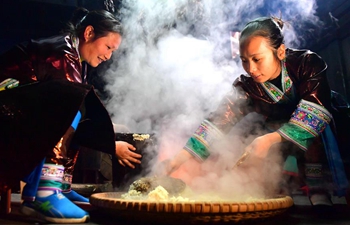
On New Year's Eve, the biggest event is the annual family reunion dinner. In northern China, it is customary to make dumplings with family members to eat around midnight. In the south, however, people like to make niangao (Chinese name for New Year rice cake) and send some to relatives and friend as gifts.
Another tradition is to stay up on New Year's Eve, known as shousui, which is thought to add on to one's parents' longevity. Since 1982, watching the New Year Gala on China's national TV has become another important activity on New Year's Eve.
The first day of the New Year is the high time to welcome the deities of the heavens and earth, traditionally by lighting fireworks at midnight. Besides, it is a taboo to use the broom on that day, since this tool is considered to sweep away good fortune.
The first day also features giving and receiving red envelopes with cash inside, known as hongbao, which are thought to bring good luck, health and wealth. But only when children and teenagers of a family express their good wishes to the seniors, they will be given a red envelop in return.
On the second day, married daughters should visit their parents, relatives and close friends. This tradition stems from the fact that married women had few opportunities to visit their birth parents in old times.
On the third day, people are supposed to stay home and have a good rest given the hustle and bustle on the previous two days. And it is regarded unlucky to receive guests or go visiting on the day in some parts of China.
OTHER CULTURAL SYMBOLS
In addition to the customs on specific days, there are also other interesting cultural symbols related to the festival.
First, Spring Festival couplets. The couplets are a pair of poetry celebrating the new year based on certain writing rules, which are usually pasted to both sides of doors before New Year's Eve.
Second, the Chinese character "fu" meaning good luck. The red diamond-shaped fu characters on the entrances of Chinese homes are usually seen hanging upside down, because the Chinese character "dao" meaning "arrival" has the same pronunciation with the one meaning "upside down."
Third, Miaohui, literally temple gatherings. Such events are usually held by folk temples for the worship of Chinese gods and immortals, with activities including rituals celebrated in the temples, opera or other performances by musical and ritual troupes, as well as various economic activities.
Fourth, Chunyun, or Spring Festival rush, as a new custom. Prior to the festival, hundreds of millions of Chinese return to their ancestral homes by train or air. Chinese travelers are predicted to make about 2.98 billion trips during the 2018 Spring Festival travel rush.