HOHHOT, Sept. 12 (Xinhua) -- United Nations Environment Program (UNEP) has praised China's work in greening one of its most formidable deserts.
More than 6,250 square kilometers of the Kubuqi desert has been reclaimed in the last 30 years, said a UNEP report.
Covering over 18,000 square kilometers, Kubuqi Desert lies in Inner Mongolia Autonomous Region. Only 800 kilometers from Beijing, it used to be a significant source of dust storms in the capital.
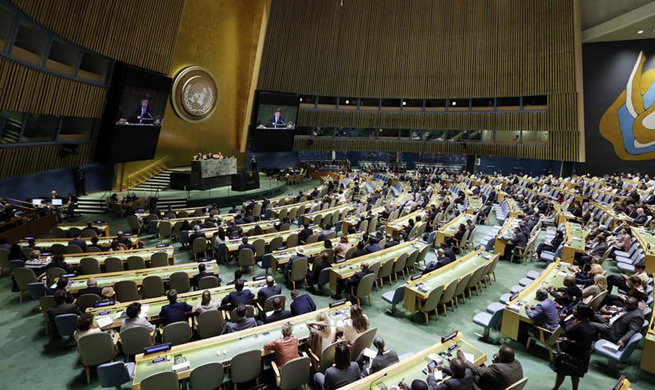
The report, "Eco-Restoration and Wealth Creation," was released at the 13th session of the Conference of the Parties to the United Nations Convention to Combat Desertification (UNCCD) on Monday. It is the first UNCCD report to specifically assess wealth created by desert restoration.
In the Kubuqi, 14.5 million tonnes of carbon was removed from the atmosphere, said the report. The project has created an estimated wealth of 24.4 billion yuan (3.7 billion U.S. dollars) in terms of water conservation, and the accumulated production of oxygen is 18.3 million tonnes, valued at 6.8 billion yuan.
Referring to the "Kubuqi model," UNEP executive director Erik Solheim said that instead of looking at desertification as a problem, it has been viewed as an opportunity for economic development and poverty alleviation.
Restored ecosystems increase biodiversity. It is estimated that the project had a value of 349 million yuan in biodiversity conservation.
In total, the Kubuqi project has created over 500 billion yuan, said the report. The project also took over 100,000 local people out of poverty and created over one million jobs.
The UNEP pointed to the "Kubuqi PPP (pubic-private partnerships) plus model" as the secret behind the success. Over nearly 30 years, a unique collaborative model for ecological restoration was built among "public, private, local community and international organizations."
The UN desertification conference opened on Wednesday and will last about two weeks. Its main task is to seek solutions for the UN sustainable goal of a "land degradation neural world by 2030" and to develop a new strategy for the 2018-2030 period.
About 1,400 delegates from 196 parties and more than 20 international organizations are attending.
The successes in the Kubuqi are a good example of the progress that China has made against desertification. Liu Dongsheng, deputy head of the State Forestry Administration, said desert was expanding at a rate of 10,400 square kilometers per year at the end of the last century, but is now shrinking by 2,424 square kilometers each year.
"China plans to reforest 50 percent of the desertified land that can be treated by 2020, and the rest by 2050," Liu said.
Pradeep Monga, deputy executive of the UNCCD, said the restoration of the Kubuqi showed the great efforts made by the Chinese people, businesses and government.