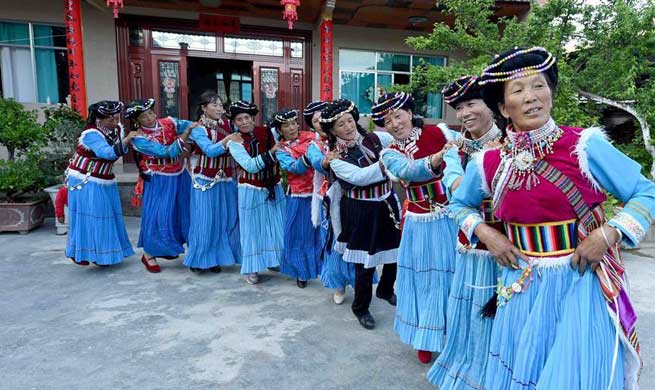
URUMQI, May 24 (Xinhua) -- In the Xinjiang Art Theater, dozens of dancers and ballerinas rehearse for a musical they are taking to Beijing.
Deputy director of the theater Anwar Samat has taken the musical "Forever Meshrep" to many cities and twice to Kazakhstan. In the Uygur language, Meshrep means gathering, and often includes poetry, music, dance and conversation. It is a UN cultural heritage.
"In Xinjiang, there are 30 types of Meshrep practice, and our musical integrates five of them," Anwar said. "The government has invested heavily to collect files, stories and different Meshrep practices, and preserve and pass them on to the younger generations."
"Forever Meshrep" tells the story of a young Uygur couple's life, according to Mikeray Yiburayin, executive director of the musical.
"The musical is based on genuine Uygur life and culture, and when we present it to the audience, many are truly touched by the vigor of our dancers," she said.
Mikeray said she also integrated modern elements into the musical, and one chapter features a ballet style.
"Over 100,000 people have watched the musical. We are applying for more state funds to take our shows to more countries," she said.
Cultural exchanges between different ethnic groups in China and beyond have increased under the reach of the Belt and Road Initiative.
Maria Yusup, a Kazakh living in Xinjiang, helps her friend manage a company which specializes in making Kazakh clothes and yurts.
"We have to hire many part-time seamstresses to meet orders from cultural parks and tour companies," she said.
Kazakh band DALA was formed in Changji Hui Autonomous Prefecture less than a year ago. The band has been invited to give performances in Shanghai and Thailand. The band members use 11 types of traditional Kazakh instruments.
"It is very hard to find many of the instruments now. I hope our performance will revive some dying musical traditions," she said.
There are 12 studios at the dubbing center of the broadcasting and TV station in Xinjiang Uygur Autonomous Region. Every year, staff at the center translate about 70 TV plays from Mandarin, Korean and other languages to Uygur and Kazakh languages. The shows are aired on the ethnic language channels of the Xinjiang regional TV station.
"People have diverse demands now. We are upgrading our storage system to store more data and prepare downloadable contents in the future," technical supervisor Askar said.